

When Everything Is Different, Nothing Is Distinct

The Roman philosopher Seneca once observed, “To be everywhere is to be nowhere.”
Centuries later, Pixar gave us a modern version of the same idea. In The Incredibles, the villain Syndrome famously declares, “When everyone’s super, no one will be.”
The contexts are different. Seneca was warning against scattering one’s attention. Syndrome was cynically describing the dilution of exceptionalism. Yet both statements point toward the same paradox: when a quality becomes universal, it loses its distinctiveness.
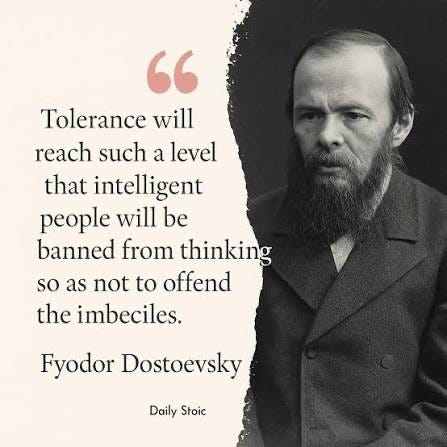
The irony is that we may be witnessing a similar paradox in our contemporary discourse about diversity.
At first glance, that statement seems absurd. Diversity, by definition, celebrates difference. How could diversity itself diminish difference?
The answer lies in the distinction between diversity and indiscriminate acceptance and unmitigated tolerance.
True diversity is not the elimination of distinctions. It is the recognition, appreciation, and productive engagement of distinctions. Diversity is meaningful precisely because people are not the same. They think differently, believe differently, value different things, possess different talents, and bring different experiences to the table. Therefore, they need to be tolerated- in the true sense of the word. Something I disagree with, but will overlook for now. Expecting someone to accept the thing that they tolerate is anti-diversity.
Difference is the raw material of diversity.
But what happens when a culture becomes uncomfortable with evaluating differences? What happens when every viewpoint is treated as equally valid, every behavior as equally acceptable, every choice as equally admirable, and every outcome as equally desirable?
Something sinister begins to occur. The very distinctions that make diversity meaningful start to disappear.
If every idea is equally correct, then wisdom loses its value. If every action is equally admirable, then virtue loses its meaning. If every lifestyle is equally beneficial, then excellence becomes indistinguishable from mediocrity. If every belief is beyond critique, then truth itself becomes irrelevant.
Paradoxically, in our effort to avoid judging differences, we may end up erasing the significance of differences altogether.
Imagine walking through an art gallery where every painting receives first place. Every canvas wins the same award. Every artist receives identical recognition regardless of creativity, skill, effort, or impact.
Initially, this might feel inclusive. Eventually, it becomes meaningless. The purpose of diversity in art is not that every painting is identical in quality or style. The beauty lies in the contrast. Some works challenge us. Some inspire us. Some reveal extraordinary mastery. Some fall short. The diversity is valuable because distinctions remain visible.
The same principle applies to people and ideas. A truly diverse society is not one where all differences are flattened into moral equivalence. It is one where differences are allowed to exist openly, where ideas compete, where perspectives are debated, where beliefs are examined, and where excellence and mediocrity are recognized without apology.
This is where modern conversations can become confused.
Tolerance has gradually shifted from “I respect your right to disagree with me” to “I must affirm that your position is equally valid.”
Acceptance has shifted from “You possess inherent dignity and worth” to “Every choice you make must be celebrated.”
Inclusion has shifted from “You deserve a seat at the table” to “No viewpoint should ever be challenged.”
Those are not the same things. The first versions preserve diversity. The second versions often undermine it. Real diversity requires disagreement. It requires friction. It requires the uncomfortable reality that intelligent, sincere, moral people can arrive at different conclusions about important issues. And that some of those conclusions are less valuable than others.
Without disagreement, diversity becomes little more than a demographic statistic.
A room filled with people who look different but think similarly is not truly diverse.
Likewise, a room filled with different opinions and experiences that are never examined or challenged is not intellectually diverse either.
Honoring diversity is never condoning the absence of standards. It is the coexistence of differences under a framework that allows those differences to be explored, evaluated, criticized, and understood.
The natural world provides an instructive example.
Biodiversity flourishes because ecosystems contain specialization. Different species occupy different niches. Different organisms contribute unique strengths. An ecosystem thrives because Diversity exists in the distinctions among its inhabitants.
Imagine trying to create biodiversity by declaring that every species need to or had the right to perform the same function. The ecosystem would collapse.
Its strength comes from difference, not artificial sameness. Human communities are no different. Organizations thrive when individuals bring different talents, perspectives, experiences, and approaches. Teams become stronger when cognitive diversity exists. Innovation often emerges from the collision of competing ideas rather than the uniformity of consensus.
Yet those benefits only occur when differences and the people who demonstrate those differences retain their distinctiveness without pressure on the others to accept that distinctiveness as equally valid as every other distinction.
If every approach is considered equally effective, learning becomes impossible. If every decision is considered equally wise, leadership becomes meaningless. If every outcome is considered equally successful, performance loses significance.
Diversity does not require the abandonment of standards. In fact, standards are what allow diversity to matter.
The goal is not to erase distinctions but to understand them. Not to suppress disagreement by giving equal ground to every idea or expression, but to engage it.
Not to flatten differences into sameness but to cultivate the wisdom necessary to navigate differences productively.
This is one of the great leadership challenges of our time. Leaders must learn how to honor the dignity of people without surrendering the right to evaluate ideas, be critical of behavior, or God forbid, disagree with someone’s actions or choices.
They must create environments where individuals feel respected while also allowing excellence to be recognized and bad ideas to be challenged. They must encourage diversity without dissolving discernment.
That balance is difficult. It requires courage. It requires humility. And it requires the recognition that acceptance and agreement are not synonyms.
Perhaps Seneca’s insight offers us a warning. To be everywhere is to be nowhere. And perhaps Syndrome’s observation offers another. When everyone is super, no one is.
The lesson for our age may be this: When everything is celebrated, nothing is exceptional.